Garments on Hangers (GOH) transport explained: A practical guide for store-ready fashion
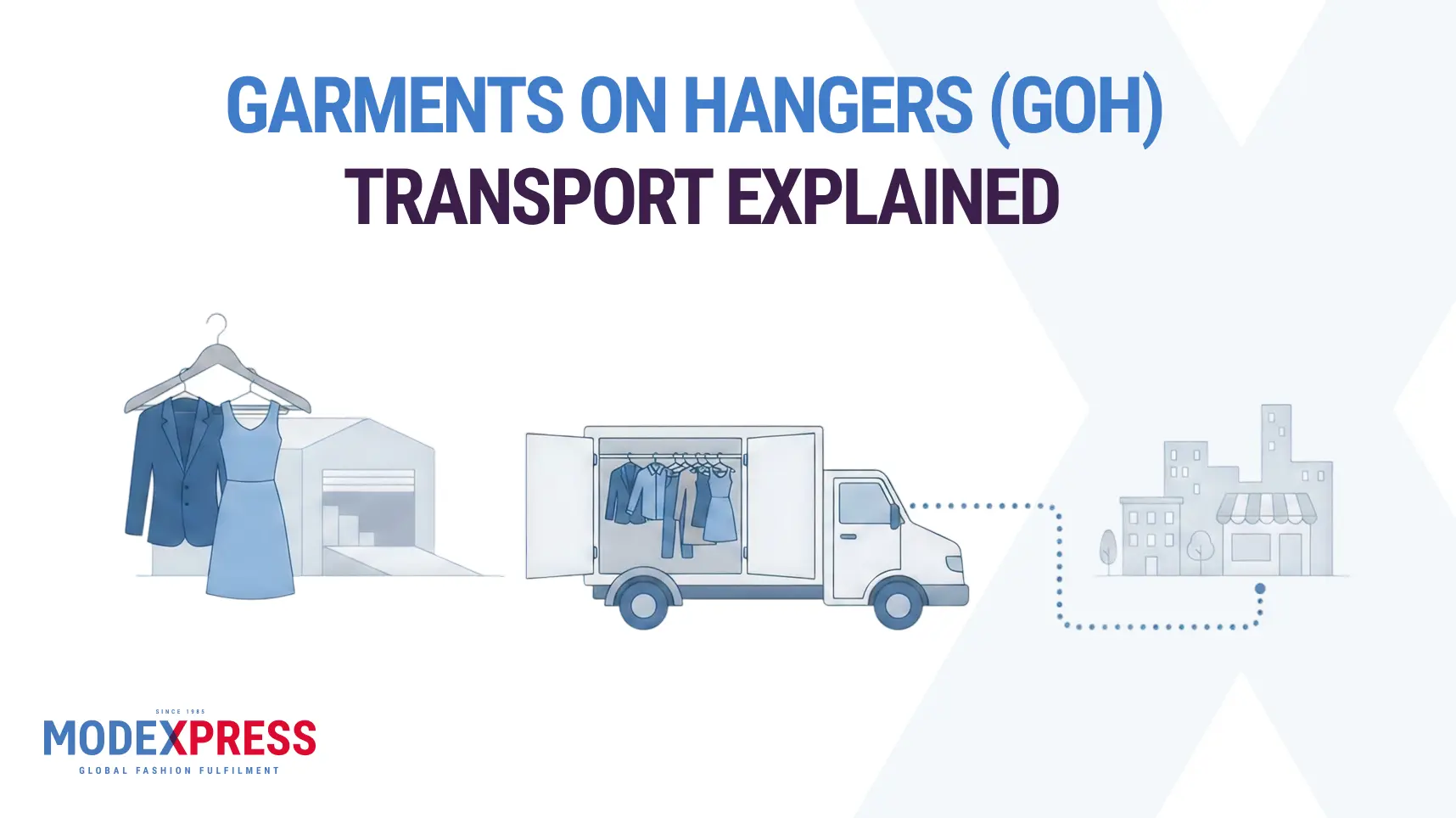
Garments on Hangers (GOH) is a transport and storage method in which clothing travels hanging, on rails or racks, from warehouse to store, rather than folded flat into boxes. Unlike flatpack transport, garments on hangers arrive store-ready, retaining their shape without steaming, re-hanging or ironing at the destination.
For example, if a suit jacket collection is flat-packed, when it arrives at the store it takes time for the retail team to unpack, check, steam, and re-hang the items. GOH removes as much of that work as possible by preparing items on hangers and delivering them on-time.
In this article, we’ll cover how GOH transport works, when it makes more sense than flatpack, and what the benefits are for stores, warehouses and retail teams.
What is Garments on Hangers Transport?
GOH is a way of moving fashion stock so that it stays hanging from warehouse to store. The logistics process is carefully managed so garments arrive in good shape and at the right time for replenishment. It takes pressure off store teams as they spend less time preparing stock and more time helping customers.
GOH makes sense when folding the garment would create rework at the store. If it needs steaming, reshaping or careful presentation before sale, such as premium clothing, hanging transport is usually worth a closer look.
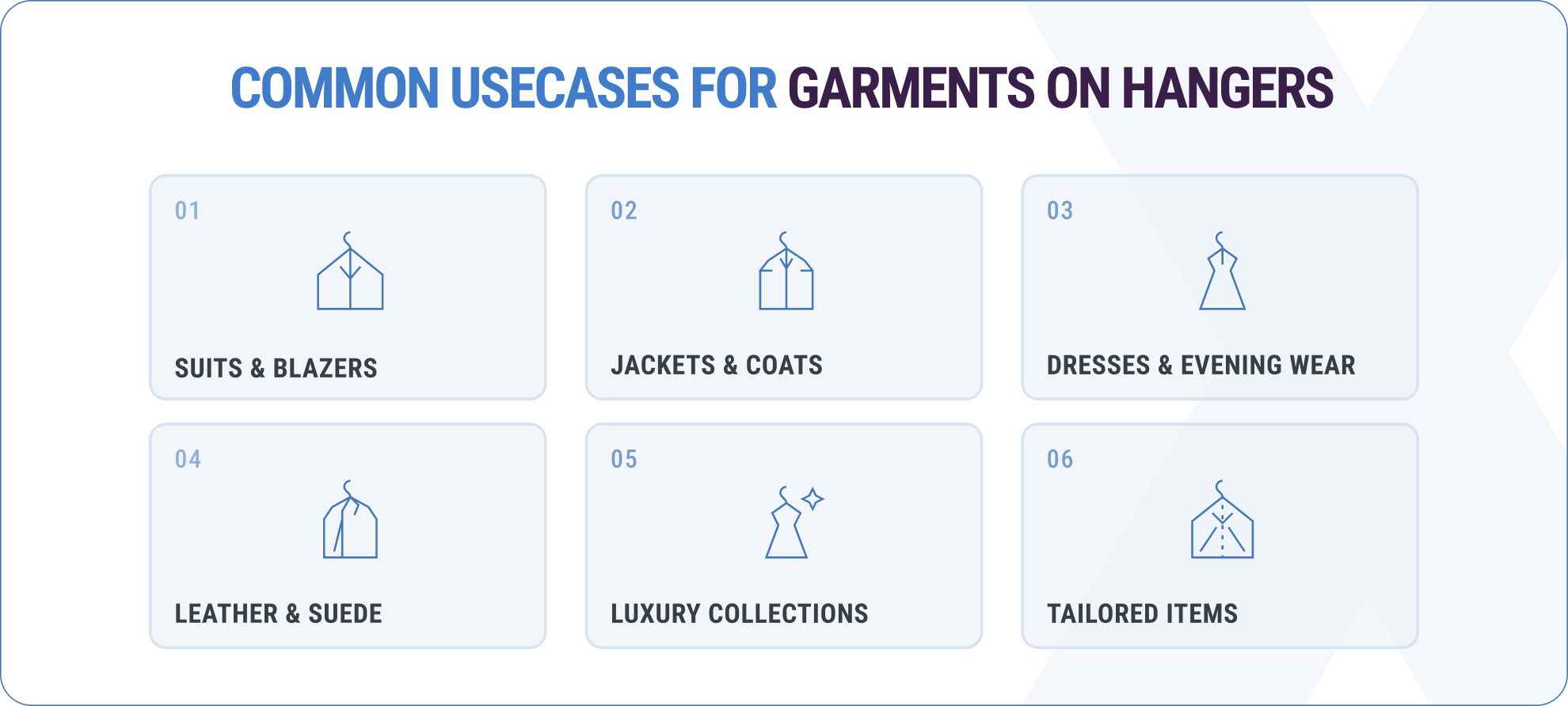
GOH transport is the standard for garment types where presentation and shape retention are essential — from suits to luxury collections.
What makes a GOH truck different?
Garments stay hanging inside a purpose-built vehicle fitted with horizontal rails or locking systems. Everything is designed around one principle: nothing moves, nothing falls, nothing creases between warehouse and store.
Heavier pieces such as suits, coats and jackets need more space and support, while lighter garments can usually be packed more closely.
How GOH warehousing supports efficient transport
The truck is only the visible part of GOH. The real quality control starts in the warehouse. If garments are stored flat and only put on hangers at the end, much of the benefit is already lost.
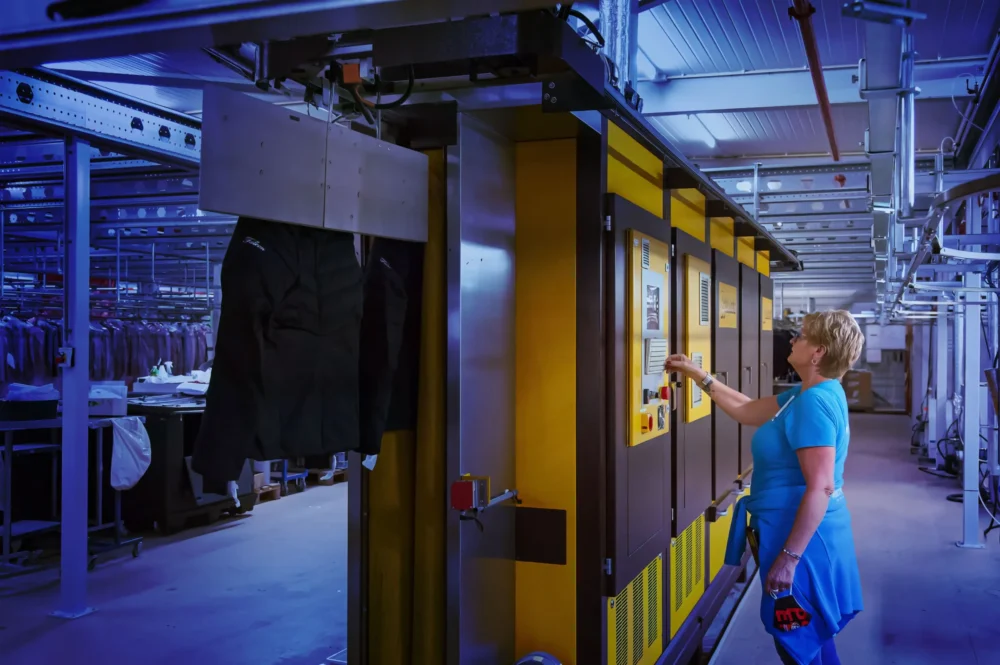
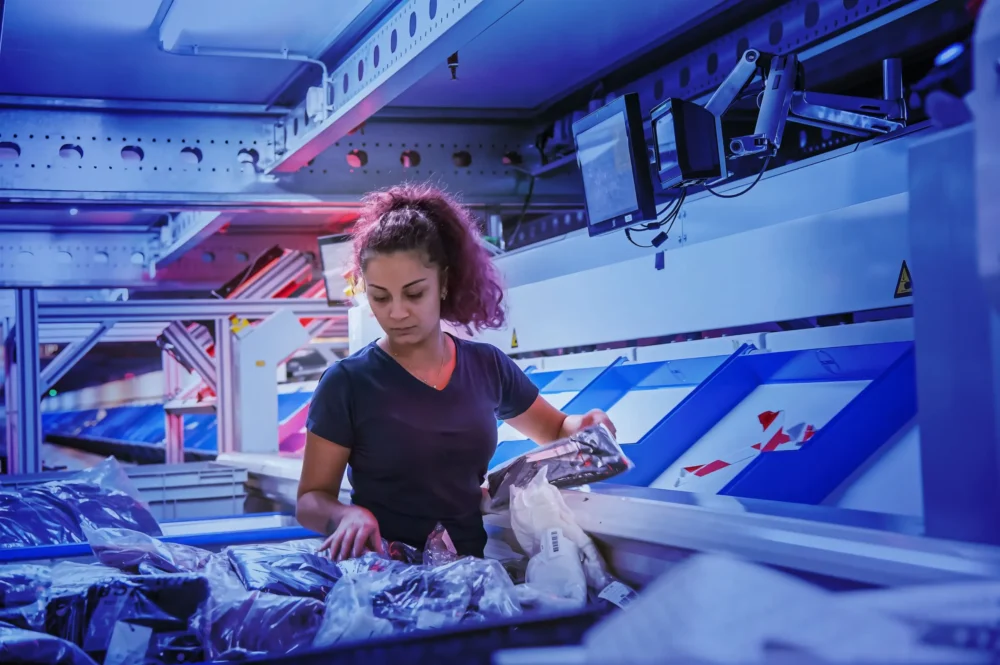
In GOH warehousing, garments are stored hanging on rail systems from the moment they arrive. They are grouped, checked and sequenced while still on the rail, and that same rail feeds directly into the loading process. The hanger travels with the garment from intake through hanging storage, onto the GOH truck, and ultimately onto the sales rack. Nothing is folded, unfolded or re-hung at any stage.
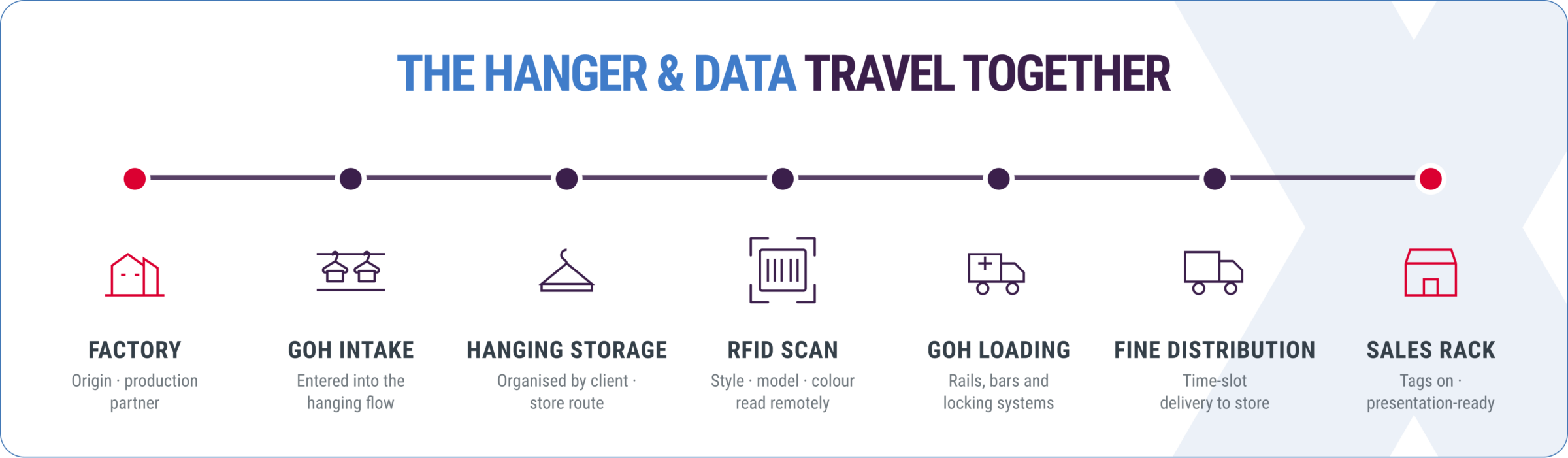
GOH shipment flow — how the hanger and data travel together from warehouse to store
How good GOH packing prevents store-level confusion
The aim of GOH packing is to make sure the store receives stock in a way that is easy to unload and move. Garments need to be loaded in the right order, secured properly on the rails, and separated by store or department where needed.
Good loading discipline is especially important for mixed shipments or international inbound flows. A GOH shipment may arrive from a production partner abroad before being checked, grouped and delivered onward through fine distribution to stores across Europe. If the loading is wrong, the problem moves downstream with the store being left to sort it out.
GOH or flatpack?
Garments on Hangers is a specialist option where the need for high-quality presentation and speed-to-floor justify the extra planning and cost. Flatpack is the practical choice for simpler items, high-volume products, and some longer routes.
“The choice between GOH and flatpack is not about principle, it is about the garment and the route. For premium pieces, hanging transport is not optional. For high-volume basics going long distance, flatpack makes more sense. Most brands need both.”

The decision shouldn’t be based on transport cost alone. If the store needs to spend a lot of time steaming, re-hanging, sorting or correcting items before they can be sold then the extra transport expenses of GOH might make sense.
Many fashion brands use a mixture of both: GOH for premium or delicate collections and flatpack for basics or distant markets.
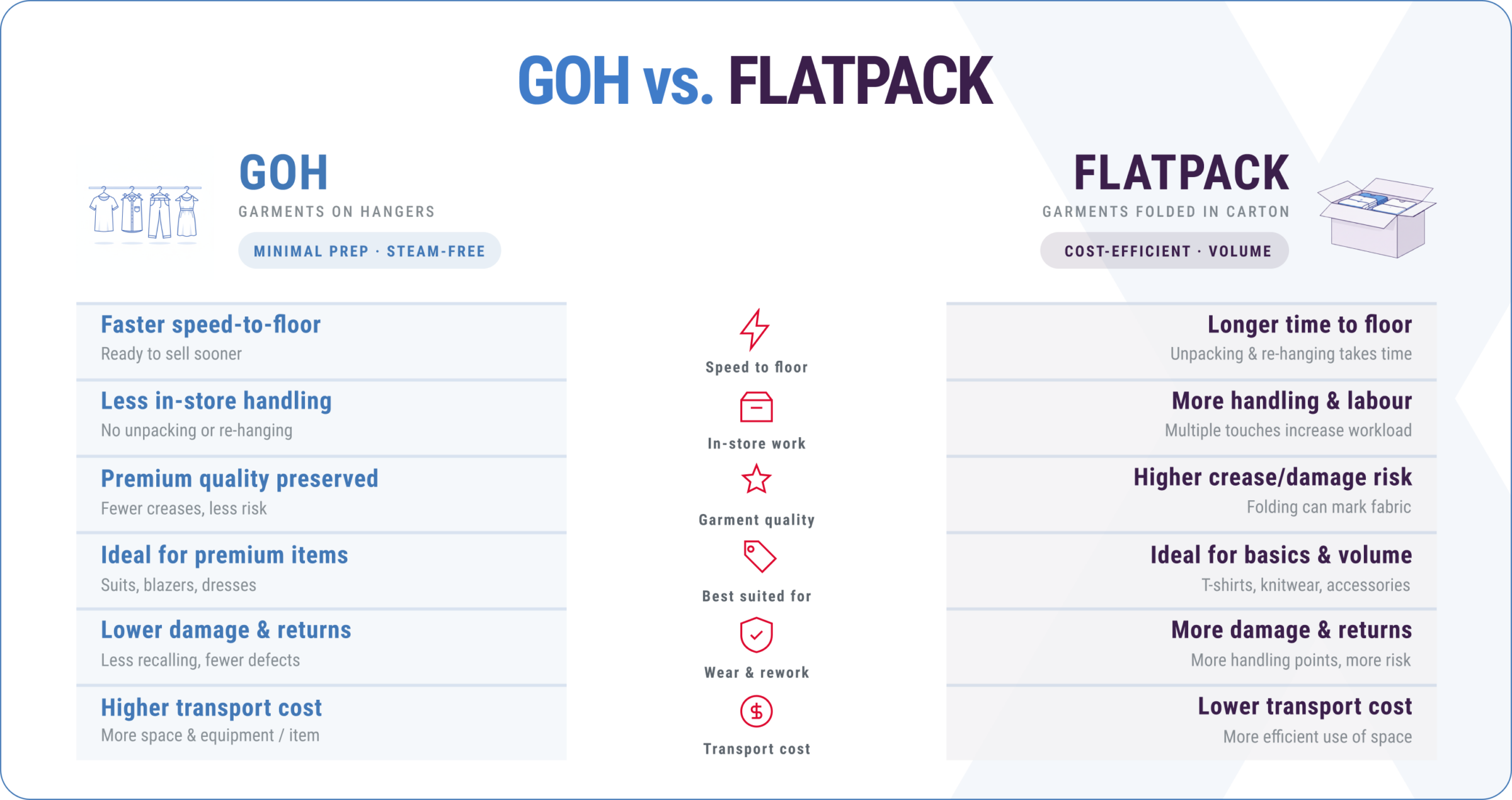
The choice between GOH and flatpack depends on the garment and the route. GOH wins on speed, quality and handling — flatpack wins on cost and volume.
The operational impact of GOH
Fewer touches, fewer problems
Every time a garment is handled, there is a small chance something goes wrong. It can be put in the wrong place, scanned incorrectly, creased, compressed or delayed before it reaches the store
One extra touch might not look like much on paper. But across a full collection, those touches add up quickly. They cost time, create more work, and increase the chance that the store team has to fix something before the item can be sold. Each touch is estimated to cost around €1 to €2 per item in a typical warehouse.
For a suit jacket or evening dress, that translates to fewer creases, fewer trips to the steamer, and a better first impression on the rack.
“With premium garments, every extra handling moment is a risk moment. GOH helps us keep the garment in its intended shape from the warehouse through to delivery, so stores spend less time correcting presentation and more time selling.”
Stock arrives ready to move
The real benefit shows up when the hanging garment delivery reaches the store. The store team still receives, scans and shelves, but the steaming, sorting and re-hanging disappear from the process.
Fast-moving retailers show why this matters. Zara is often cited as a benchmark for speed-to-floor, with items moving off the truck and directly onto the sales floor. Not every brand operates at Zara speed, but the principle is relevant: the less work needed after delivery, the faster stock is available on the sales floor.
A logistics company like Modexpress connects GOH with last-mile fashion distribution, delivering garments in agreed time slots. Hanging stock arrives when the team is ready for it, allowing them to move it more quickly into the storeroom or straight onto the shop floor.
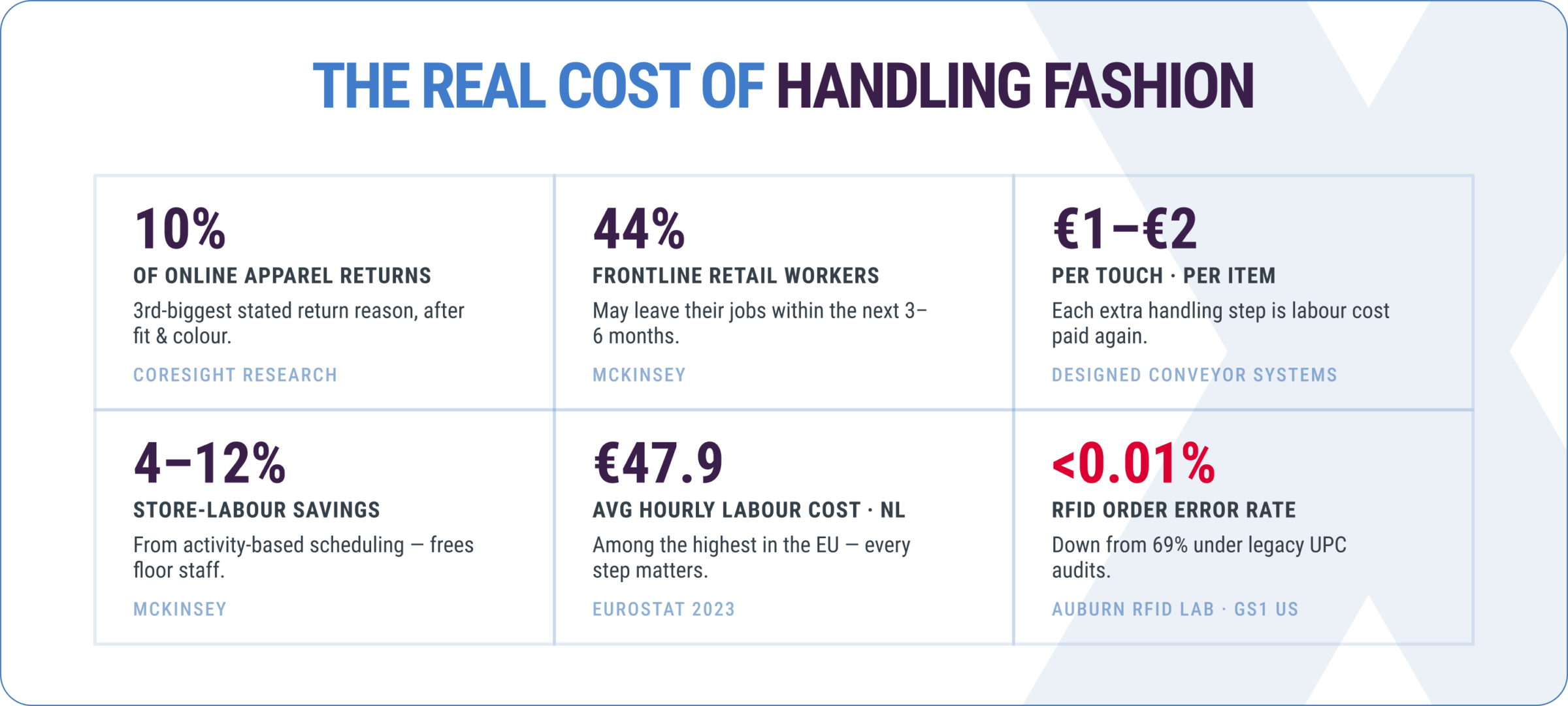
Six independently sourced data points that shape the business case for GOH transport: from damage-driven returns to the cost of every extra touch in the supply chain.
More time for store staff to assist customers
If two people are stuck in the back room sorting out a delivery, that is two fewer people helping customers or keeping the store well stocked.
Freeing people up from tedious work can also help boost morale, which is needed when you consider that frontline worker retention in retail is only 46% to 60%, and nearly 1 in 5 store managers cite disengagement as the main reason for quitting.
In high-cost labour markets such as the Netherlands, every avoidable handling step matters. Average hourly labour costs are €38.2 in the euro area in 2025, with the Netherlands among the highest-cost countries at €47.9.
GOH won’t fix a staffing shortage. But if two people spend an hour less per delivery in the back room, that is an hour gained on the shop floor.
Reduced packaging waste
Hundreds of billions of plastic polybags are produced globally each year, with 72% ending up in landfills. B2B packaging is a target area for waste production, with many companies working to eliminate problematic and unnecessary plastic in packaging by 2030.
Progress is easier on consumer-facing packaging than behind the scenes. The Fashion Pact reports that 60% of members have moved to plastic-free consumer bags, but only 15% have done the same for hangers and B2B transport packaging. That makes the delivery process itself an important place to look for waste reduction.
GOH reduces the need for carton-based packaging: the boxes, filler material and outer wrapping that flatpack transport relies on. That means less waste to clear from the stockroom and a simpler handover at the store.
Individual garments may still travel with a protective cover, so GOH does not eliminate all single-use packaging from the chain. But by removing the bulk of cardboard and outer wrapping from every delivery, it is a practical step toward reducing material use where it adds up most.
“GOH-equipped trucks have streamlined our supply chain by minimising the need for carton packaging, while also improving store operations and cutting packaging waste.”

How RFID makes GOH easier to receive and more accurate
GOH and RFID reinforce each other. GOH keeps garments physically easy to handle: hanging, visible and organised by shipment, store or route. RFID makes the same shipment digitally easier to verify. Instead of checking every item one by one, stores can receive and confirm garments faster.
“GUsing RFID technology not only helps our stores quickly locate products but also allows us to accept deliveries faster. Instead of scanning each item individually, RFID scanners can detect the entire shipment as soon as it enters the store.”
A recent study found that legacy UPC-based audits recorded order inaccuracies 69% of the time, while RFID reduced this to less than 0.01% of orders. McKinsey also reports that RFID can reduce inventory-related labour hours by 10 to 15%.
RFID technology allows product information such as style, model and colour to be read remotely, reducing inventory time and improving traceability. GOH protects the physical presentation of the garment, while RFID supports traceability, stock accuracy and faster receipt.
The upcoming European regulation challenges for GOH
GOH becomes more complicated once it moves into European retail distribution. It’s a problem that’s about to deepen, as from 1 July 2026, the European Commission says light commercial vehicles between 2.5 and 3.5 tonnes used for international transport for hire or reward must have a tachograph installed.
On top of that, the Netherlands is introducing a per-kilometre truck toll from 1 July 2026. The average rate is €0.19 per kilometre, with lower rates for cleaner vehicles. For GOH operators running daily routes between warehouses and stores, the cost adds up quickly. Combined with rising fuel prices, increasing wages and stricter emission requirements, this means operating costs in fashion transport are structurally increasing. The question is not whether those costs pass through, but how smartly you absorb them.
City access is changing too. In the Netherlands, zero-emission zones for logistics were introduced from 2025, and access rules for some Euro 6 vans are being extended only until 1 January 2029. In practical terms, more city-centre deliveries will need to be planned around electric vehicles and charging infrastructure.
For GOH specifically, this is relevant because hanging transport requires purpose-built vehicles. Not every operator will be in a position to transition their GOH fleet to electric vehicles in time. Working with a specialist that is already planning for this transition avoids disruption to store delivery schedules as 2029 approaches.
“GOH is not something you bolt onto a standard transport operation. You need the right vehicles, the right warehouse setup, and increasingly the right permits to access city centres. That combination is getting harder to improvise, which is exactly why fewer parties will be able to offer it at scale in the years ahead. At Modexpress, we are already investing in that transition, so our clients don’t have to worry about it.”
Is your collection already hanging? Or still folded?
The right transport choice depends on the garment type and routes. For basics and long-distance flows, flatpack may still be the practical option. But for premium garments, hanging transport can protect value that might otherwise be lost in the stockroom.
Learn more about Modexpress’ transport solutions or get in touch with our team to see how GOH, RFID and store delivery planning work in practice.
Related posts
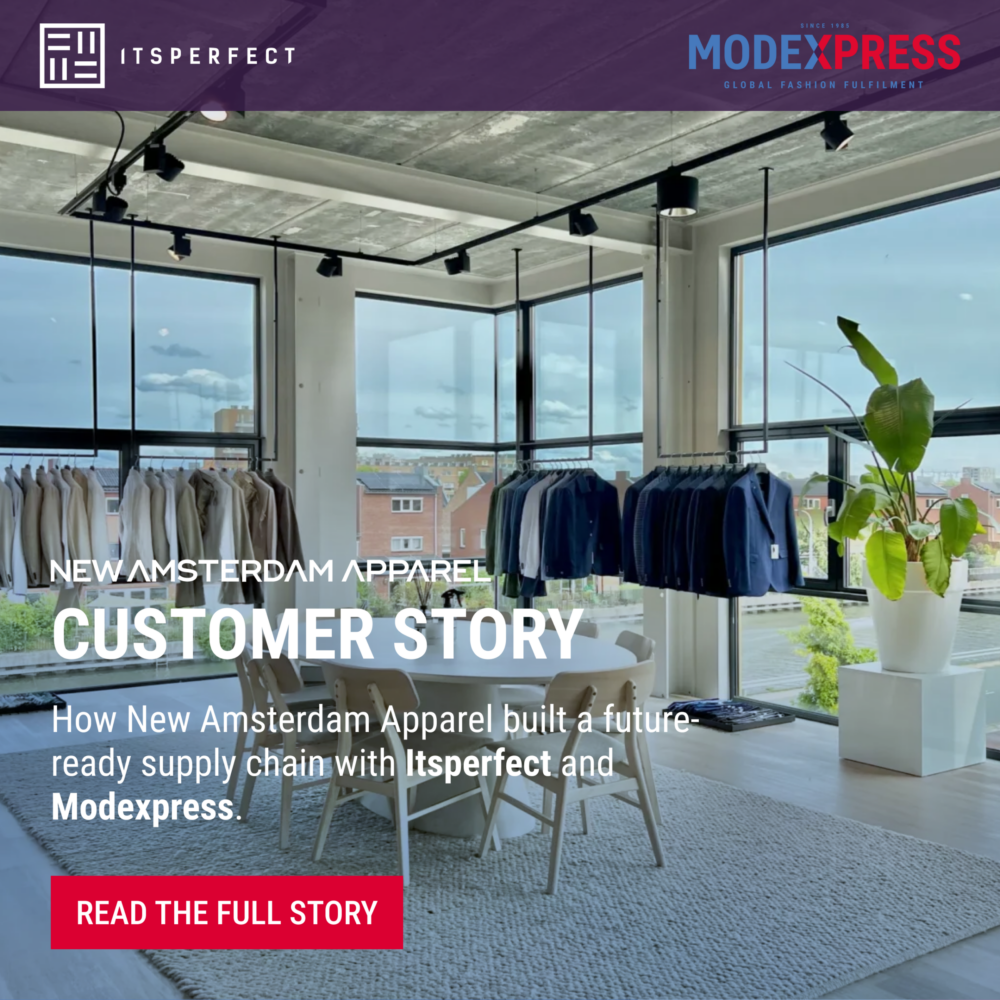
Customer story: How New Amsterdam Apparel is scaling international growth
6 August 2026International expansion creates exciting opportunities, but it also brings operational challenges. How do you maintain ...

A Passion for people and strong teams
2 July 2026What does it take to put the right people in the right roles in a ...

Growing with Modexpress: Gaby’s story
20 May 2026What is it like to grow alongside a company for nearly 23 years? Finance Manager ...
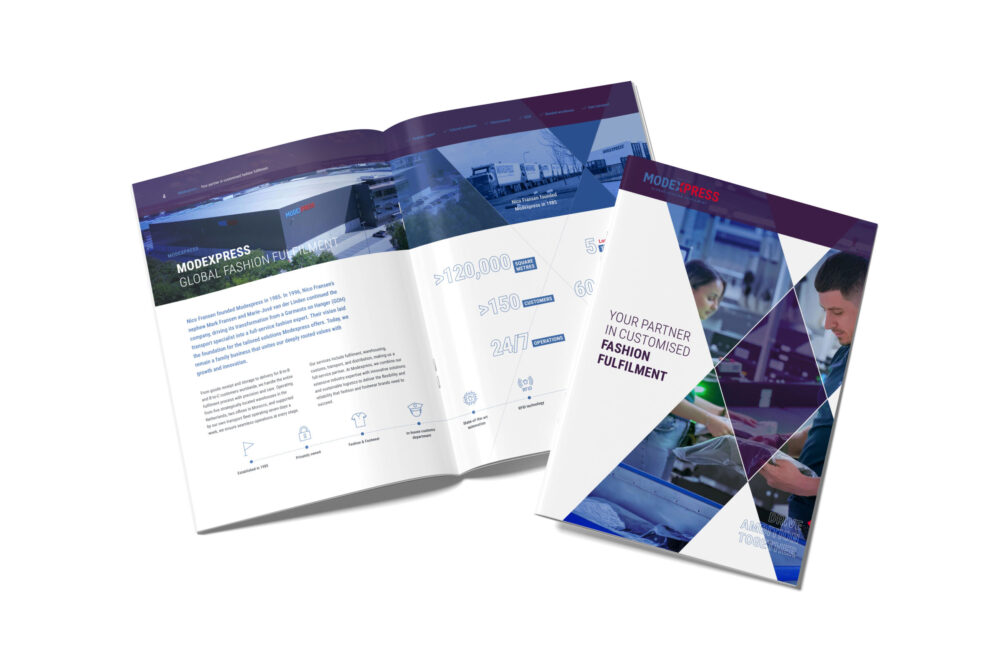
Discover what Modexpress can do for your brand. Download our brochure after submitting your details.
"*" indicates required fields